Loading...
Cracked, damp, or uneven garage and basement floors are more than an eyesore. A properly installed concrete floor - built for Conway's clay soil - stays level, dry, and solid for the long haul.
Concrete floor installation in Conway starts with preparing the ground underneath - leveling, compacting, and adding a gravel base - then pouring and finishing the slab with control joints and the surface you need. Most residential projects take one to three days to pour, though the concrete continues gaining strength for about a month after the pour.
Conway's clay soil and high annual rainfall make ground preparation more important here than in most parts of the country. A slab poured on poorly compacted clay will crack and shift within a few years, no matter how well the concrete itself was mixed. Many homeowners in established neighborhoods like Oak Forest and College Station are now dealing with original slabs from the 1960s and 70s that were poured without the moisture barriers and subgrade prep that are standard today. If your yard also needs help managing slope or water flow, our concrete pool decks and outdoor slab work pairs well with floor installation projects when you are doing multiple concrete surfaces at once.
Small hairline cracks in concrete are often harmless. But if you see cracks wider than a quarter-inch, cracks with edges at different heights, or cracks that are clearly growing over time, the slab underneath is moving - likely from Conway's clay soil expanding and contracting with the seasons. Patching those cracks repeatedly is a short-term fix.
If your garage or basement floor collects water after heavy rain - a frequent reality in Conway - or feels damp when it has not rained recently, moisture is getting through the slab. A new slab with a proper vapor barrier solves this in a way that no amount of sealing the existing floor will replicate.
If you can feel a slope, hump, or dip when walking across your floor, the slab has settled unevenly. This is more than cosmetic - uneven floors cause doors to stick, make parking difficult, and create trip hazards. In Conway's older neighborhoods, this type of settling is common in homes where original ground prep was not done to today's standards.
When the top layer of a concrete floor starts to flake off in chips or the surface looks pitted and rough, the concrete is deteriorating from the inside out - a condition called spalling. This often happens when moisture gets into the slab and freezes during Conway's occasional winter cold snaps, or when the original mix was not correct. Once spalling covers a large area, resurfacing only delays the inevitable.
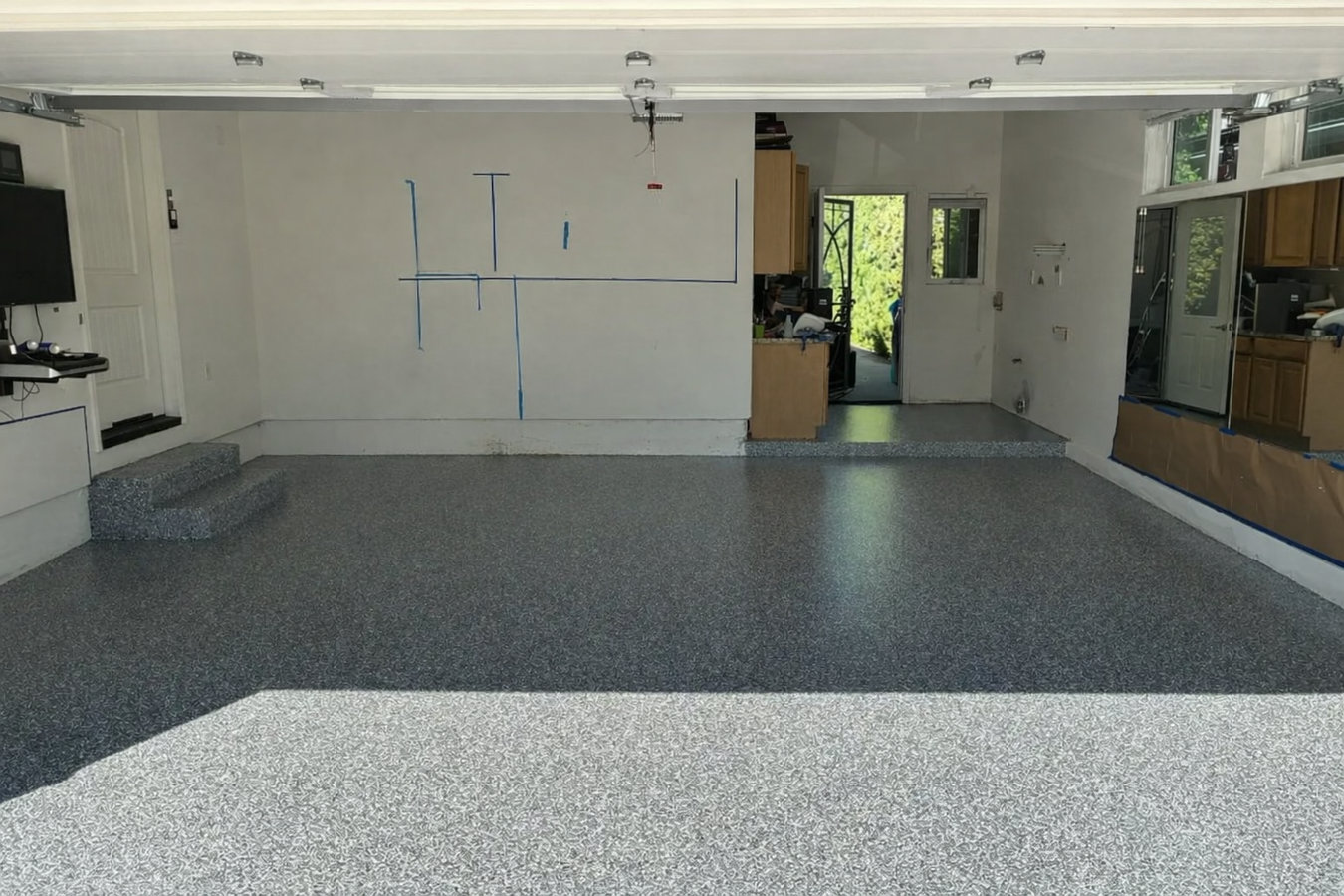
We install concrete floors for garages, basements, additions, and utility spaces across Conway and central Arkansas. Every project starts with a thorough assessment of the existing ground - checking compaction, looking for drainage issues, and deciding whether extra prep work is needed before a single drop of concrete is poured. We include control joints on all floors, which give the concrete a controlled place to move instead of cracking randomly across your slab.
Floor installations often connect with other concrete work on the same property. If you are also thinking about upgrading an existing garage surface, our garage floor concrete service covers overlays, coatings, and full replacement for garage spaces specifically. For homeowners working on outdoor spaces at the same time, our concrete pool decks team can coordinate outdoor slab work alongside an interior floor installation to minimize disruption.
Best for garages, basements, and additions where there is no existing slab or the current one needs to come out and be replaced from scratch.
For older Conway homes where the existing slab has cracked, settled, or deteriorated to the point where patching no longer makes financial sense.
A vapor barrier under the slab blocks ground moisture from migrating up through the concrete - especially important in Conway where spring rainfall and clay soil create high moisture pressure.
Broom finish for grip, smooth trowel finish for a clean look, or a base slab ready to receive tile, epoxy coating, or polished concrete - we finish the surface to match your plans.
Conway's clay-heavy soil expands when it gets wet and shrinks when it dries - and it does this through every Arkansas wet season and dry summer. That cycle puts real stress on concrete slabs from below. A contractor who skips compaction or a proper gravel base because it is faster leaves you with a floor that cracks and shifts within a few years. Conway's summer heat adds another layer of complexity: when temperatures push into the 90s with high humidity, concrete can set too fast if pours are not timed and managed correctly. Our crews schedule pours early in the morning during hot weather and use additives that slow the set time so the concrete has a chance to be finished properly before it hardens. Homeowners in areas like North Little Rock and Cabot face the same soil and weather conditions and have trusted us with their concrete floor projects.
Conway has a significant number of homes built between the 1960s and 1980s, particularly in neighborhoods like Oak Forest, College Station, and the streets near downtown and the university campuses. Many of those original slabs are now at an age where replacement - not patching - is the smarter long-term investment. At the same time, Conway's newer subdivisions on the west and north sides of the city are generating demand for garage and addition floors in newer homes. We work across all of Conway and understand the permit requirements for concrete floor work through the City of Conway Building Inspection Division - we handle the permit on your behalf so you have documentation that the work meets code.
We respond within one business day. We will ask a few quick questions about your space - size, current condition, and what you plan to use it for - then schedule a free visit to see the area before giving you a written price. Photos rarely capture what the ground prep will actually require.
We walk the space, check the ground condition, look for drainage issues, and confirm whether a permit is required. Your written estimate breaks down prep work, materials, finishing, and cleanup separately - not just a single number. We handle the permit application with the City of Conway if one is needed.
You clear the space before the crew arrives. We remove any existing slab, grade and compact the ground, install a vapor barrier if needed, add a gravel base, and set the wooden or metal forms. This prep phase often takes a full day on its own for larger spaces and is what separates a slab that holds from one that does not.
The concrete is poured, spread, leveled, and finished in one session. We cut control joints and apply your chosen surface finish. You can walk lightly on the floor after 24 to 48 hours, but we will give you a specific timeline for each activity - including when it is safe to park on it. We do a final walk-through with you before calling the job done.
Free written estimate. No pressure, no obligation. We respond within one business day.
(501) 273-0974We assess the ground before we pour anything. In Conway's clay soil, that means compaction, a proper gravel base, and drainage planning - the steps that determine whether your floor holds for 30 years or starts shifting in five. The Portland Cement Association guidelines we follow are the same standards used for long-lasting residential floors across the country.
We have installed concrete floors across Conway and throughout central Arkansas - from Cabot to North Little Rock - which means we have seen the full range of soil conditions, drainage challenges, and local code requirements homeowners in this region face. That track record matters when you are choosing who pours your floor.
We handle the permit process with the City of Conway Building Inspection Division on your behalf. When the job is done, you have documentation showing the work was done to local code - which matters if you ever sell the property or need to make changes later. Confirm our standing with the Arkansas Contractors Licensing Board.
Conway summers push into the 90s with high humidity, which speeds up how fast concrete sets. We schedule pours for the cooler parts of the day and use set-retarding additives when needed so the crew has time to finish the surface properly. That planning is the difference between a smooth floor and one with surface cracks that appear within days of the pour.
A concrete floor is only as good as what happens before the pour. Our approach to subgrade preparation, moisture management, and scheduling is built around what Conway's soil and climate actually demand - not what works in a textbook environment.
When your project includes outdoor slabs around a pool or patio, we can coordinate that work alongside an interior floor installation.
Learn more about Concrete Pool DecksGarage-specific concrete work including overlays, coatings, and full slab replacement for Conway homeowners upgrading their garage surface.
Learn more about Garage Floor ConcreteSpring and fall booking slots fill quickly - request your free written estimate now before the best weather window closes.