Loading...
A settled slab lifted without fixing the drainage underneath will just settle again. Get foundation raising that addresses Conway's clay soil movement, not just the symptom on the surface.
Foundation raising in Conway is the process of lifting a sunken or tilted concrete slab back to level by pumping material beneath it to fill the void and push the slab up - most jobs take less than a day, and you can walk on the surface as soon as the work is done.
The technical names for this are mudjacking or slab lifting, but what it really means is fixing a concrete problem without tearing out and replacing the whole slab. Conway homeowners deal with settled concrete more often than most because of the clay soil underneath Faulkner County. That soil swells when it absorbs water and shrinks when it dries out, and over years of wet springs followed by dry summers, voids form under the slab. Once there is a void, gravity does the rest - the slab drops, tilts, or cracks. Foundation raising fills that void and lifts the slab back where it belongs.
Homeowners who notice cracking or settling in their slabs often compare foundation raising with a full slab foundation build, which makes sense when the existing concrete is in poor shape or the settling is severe. Understanding which option fits your situation is something we help you figure out on the first call.
If you can see a clear height difference between two sections of concrete - even just an inch or two - that is a settled slab. In Conway, this often shows up first at the joint between your driveway apron and the street, or between sidewalk panels near tree roots. A tripping hazard that was not there a few years ago is one of the clearest signs the ground beneath has shifted, and in Conway's clay soil, that shift does not usually correct itself.
Conway gets heavy spring rains, and if you notice water sitting against your home's foundation or collecting in low spots on your patio or garage floor after a storm, the slab may have tilted inward. Water that drains toward the house instead of away from it is both a sign of settling and a cause of future settling - it is a cycle worth breaking sooner rather than later, because the soil movement that caused the first tilt will keep happening every wet season.
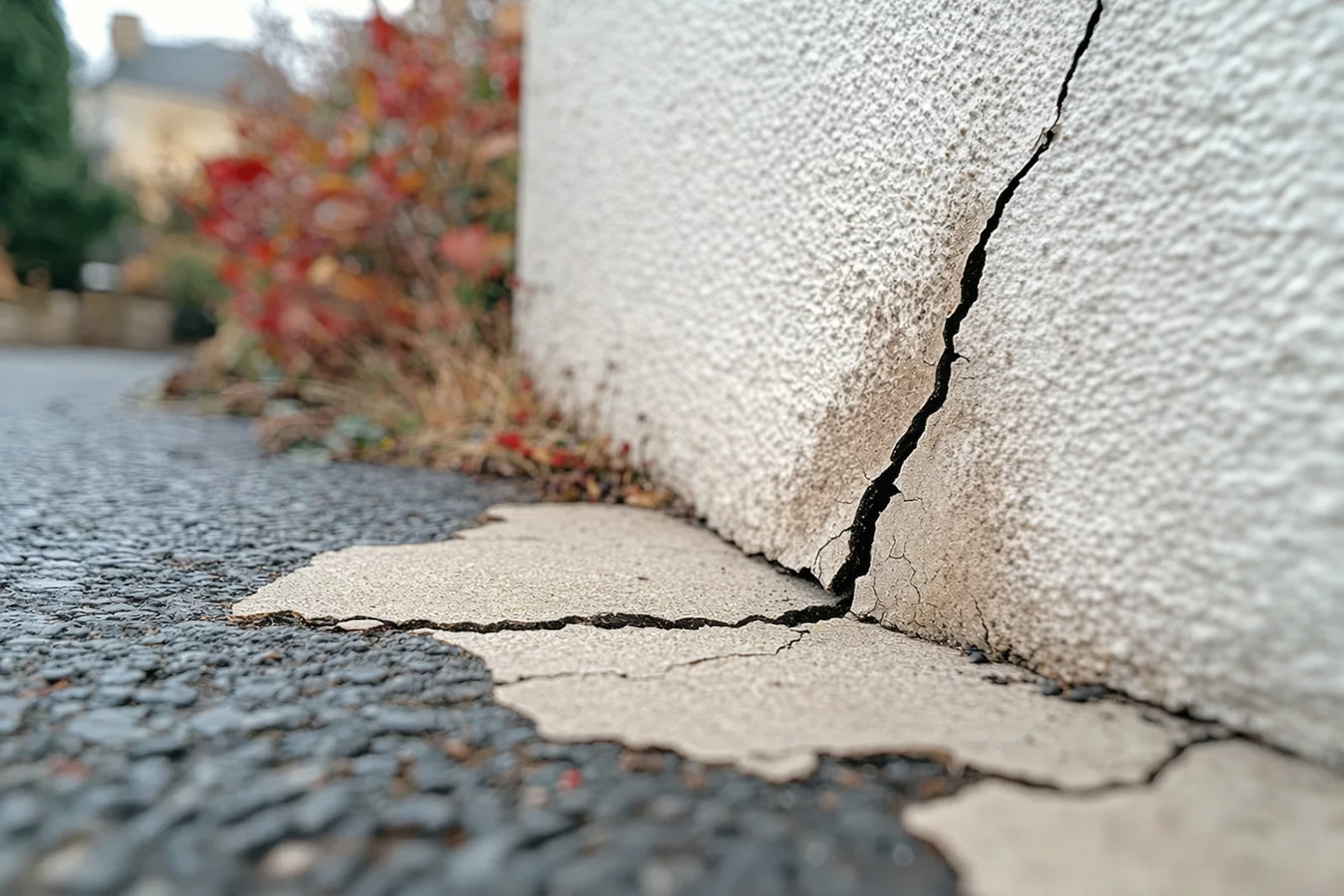
Diagonal cracks across a concrete floor - especially ones that run from a corner toward the center - are a common sign that one section of the slab has dropped relative to another. In Conway's clay soil, this kind of differential settling is very common in garages and carports built in the 1980s and 1990s. A crack that has gotten wider over the past year or two is more urgent than one that has stayed the same size, but both are worth having assessed.
A visible gap between a concrete porch, stoop, or patio slab and the wall of your house is a strong signal that the slab has dropped away from the structure. In Conway, this often happens on the north or shaded side of a home where moisture stays in the soil longer. Left alone, that gap allows water to run directly under the slab and accelerate the problem, washing out even more soil and making the void larger year after year.
We lift settled concrete slabs across Conway and the surrounding area using mudjacking and polyurethane foam injection. Every foundation raising job starts with a site visit where we probe the area to find the void, check how the slab is draining, and look at what caused the settling in the first place. We do not just pump material under the slab and call it done - if drainage is sending water toward the foundation, we talk through what needs to happen to fix that before the slab settles again. In Conway's clay soil, drainage is almost always part of the conversation, because water collecting near the slab is the reason the void formed. Homeowners who need a broader foundation fix often combine foundation raising with our concrete cutting service when the plan involves removing a severely damaged section and pouring new concrete adjacent to the lifted area.
For homeowners building new structures or replacing old foundations, foundation raising sometimes connects with a full slab foundation build when the settling has gone beyond what lifting can reasonably fix. We tell you honestly which situation you are in - sometimes the right call is to raise the slab, and sometimes it is to replace it. That decision depends on how bad the cracking is, how much the slab has moved, and whether the concrete itself is still structurally sound.
Best for driveways, garage floors, and patios where the slab is still in good shape but has dropped or tilted - uses a cement-and-soil mixture pumped under the slab to fill the void and push it back up.
Suited for situations where the soil underneath is soft or saturated, or where a lighter material is needed - foam cures faster than mudjacking and leaves smaller injection holes.
For homeowners whose settled slab was caused by water pooling near the foundation - the lift addresses the symptom, and the drainage work addresses the cause so the problem does not come back.
We probe the area before drilling any injection holes so we know exactly where the void is and how large it is - a step that prevents uneven lifting and cracking after the work is done.
Conway sits on expansive clay soil that is common across Faulkner County and much of central Arkansas. That soil swells when it gets wet - and with over 50 inches of rain a year, it gets wet often - and then shrinks back when it dries out during the summer. This wet-dry cycle creates voids under concrete slabs more reliably than in areas with sandier or rockier ground. A slab poured in the 1980s has been through 40 cycles of that movement, and each one pushes the concrete a little further out of position. Foundation raising in Conway is not a luxury repair - it is a direct response to the way the ground here behaves. Homeowners in older neighborhoods near downtown and around the University of Central Arkansas see this settling constantly, because those homes have been sitting on the same shifting clay for decades. Fixing the slab without addressing drainage is the most common reason foundation raising does not hold long-term. For more information on how soil conditions in central Arkansas affect concrete foundations, the University of Arkansas Cooperative Extension provides research-backed guidance on expansive soils in the region.
We work throughout the Conway area, including homes in Maumelle and Benton, where the same clay soil conditions create the same settled slab problems. Whether your home is off Dave Ward Drive or tucked into one of the older neighborhoods near Hendrix College, we have seen what Conway's soil does to concrete and know what it takes to fix it right.
We ask where the settling is, how long you have noticed it, and whether you have seen any cracking. Most Conway contractors can schedule a site visit within a few days, and we respond to new inquiries within one business day.
We probe the area to find the void, check how the slab is draining, and look at what caused the settling. This is when we determine which lifting method makes sense for your specific situation and whether drainage work is needed to make the repair last.
You get a written estimate that spells out the method, number of injection points, and total cost. If a permit is required by the City of Conway for your specific project, we tell you upfront and handle pulling it.
We drill small holes in a pattern, pump the lifting material until the slab is level, then patch the holes and clean up. Most jobs take less than a day, and you can walk on the surface as soon as we are done - wait 24 hours before driving on it.
Get a written estimate with no pressure to commit. We respond within one business day.
(501) 273-0974We have been lifting settled slabs across Faulkner County for years, and we know how Conway's clay soil behaves through wet springs and dry summers. That local knowledge means we address the drainage issue that caused the settling, not just the symptom on the surface.
We hold a current license through the Arkansas Contractors Licensing Board, which you can verify yourself in about two minutes online. That license means we have met the state's requirements and maintain the bonding and insurance needed to work on your home.
We probe the area before drilling any injection holes so we know exactly where the void is and how large it is. That step prevents uneven lifting and cracking after the work is done - a problem that happens when contractors guess instead of assess.
Sometimes the right answer is to raise the slab, and sometimes the right answer is to replace it. We tell you which situation you are in based on the condition of the concrete and how far it has moved - not based on which job makes us more money.
We have been fixing settled slabs in Conway since 2023, and we stand behind our work with the kind of follow-through you expect from a contractor who plans to be here next year and the year after that.
Remove damaged sections of concrete cleanly with diamond-blade cutting before replacement or adjacent work.
Learn more about Concrete CuttingFull slab foundation replacement when settling has gone beyond what lifting can fix.
Learn more about Slab Foundation BuildingOne call gets you a written estimate and a clear explanation of what caused the settling and how we will fix it. No pressure, just straight answers.