Loading...
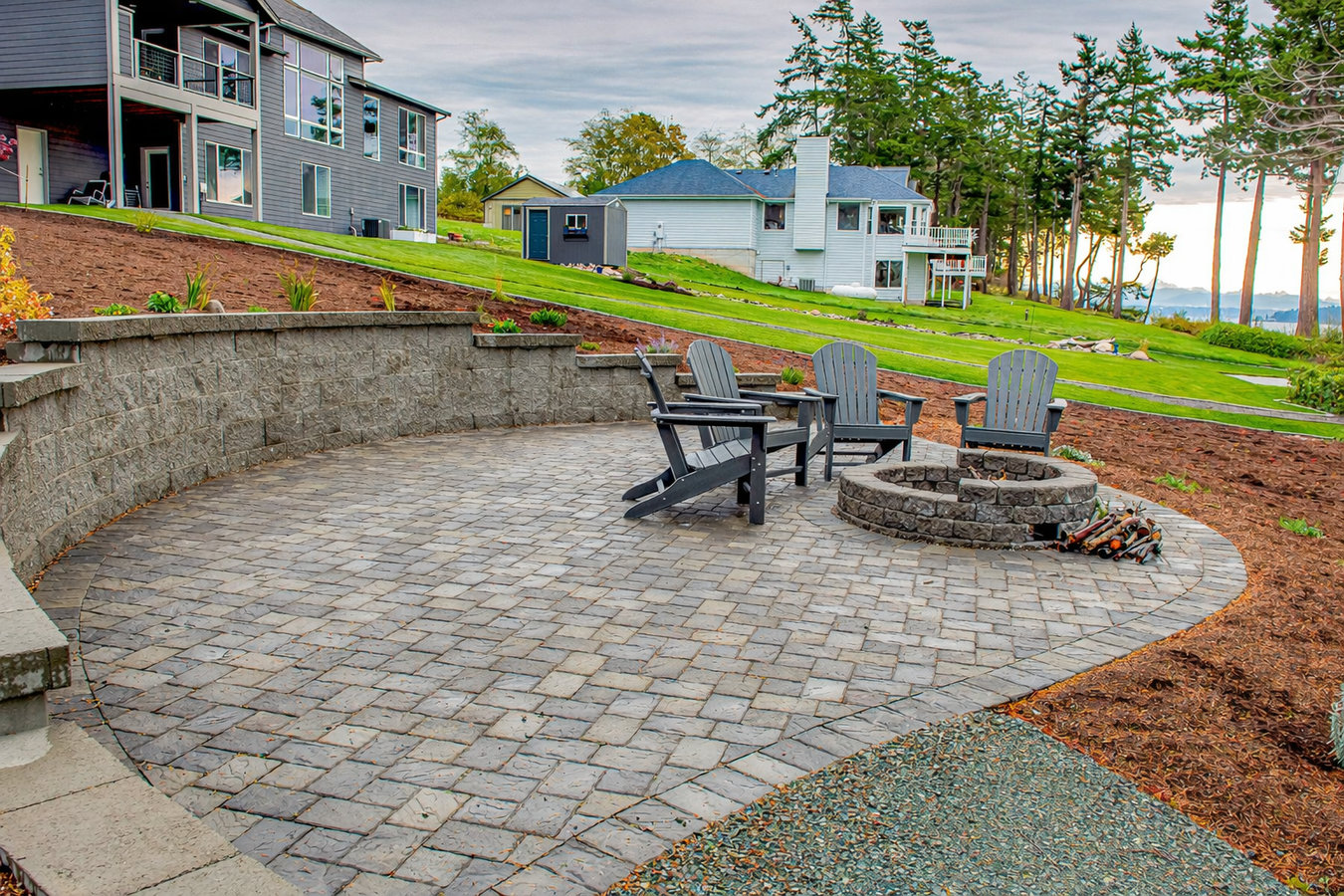
Mud, uneven ground, or a crumbling old slab keeping you out of your own backyard? We build concrete patios in Conway that stay level through wet springs, dry summers, and years of Arkansas weather.
Concrete patio construction in Conway means removing the old surface, compacting Faulkner County clay soil, laying a gravel drainage base, and pouring a slab that stays level through wet and dry seasons — most residential jobs run one to three days on-site, with full strength reached in 28 days. Conway averages over 52 inches of rain per year, and a patio that is not properly graded becomes a drainage problem that gets worse every storm. If you want to take your outdoor space further, our stamped concrete services give you decorative patterns on top of that same durable base.
A lot of patios in Conway crack not because of poor concrete, but because of what sits under it. Clay soil that swells and shrinks with every rain cycle puts stress on any slab that was not built on a properly compacted, drained base. We address that from the first day of work — grading and compacting before we ever set a form or order a truck.
Small hairline cracks are cosmetic, but cracks wider than a quarter-inch — especially uneven ones — suggest the slab has shifted. In Conway, this typically means the clay soil underneath expanded and contracted enough to break the bond. Patching is temporary; the movement continues.
If the top layer is peeling off in chunks or the surface looks rough and pitted, moisture has gotten in and freeze-thaw cycles have done their work. Conway's occasional hard freezes are enough to cause this on older unsealed slabs, and the damage accelerates each winter.
Many Conway homeowners have a gravel pad, patchy grass, or bare dirt that turns to mud after every storm. If you find yourself avoiding your own backyard because the surface is unpleasant, a properly graded concrete patio solves that — clean, dry, and level through the whole rain season.
Conway gets about 52 inches of rain per year. If water stands near your back door or along the foundation after storms, a properly sloped patio can redirect that drainage away from the house. This protects your foundation and eliminates the muddy entry problem after every heavy rain.
We pour standard four-inch slabs for foot traffic and outdoor furniture, and we go to six inches when the application calls for it — a hot tub, a heavy grill station, or a golf cart pad all need the extra depth. Plain gray concrete is the most cost-effective choice, but we also offer stamped patterns that mimic stone, brick, and slate, as well as colored finishes and exposed aggregate texture. All of these decorative options use the same base prep process as our standard slabs — the finish changes, the foundation work does not. For outdoor water features, our concrete pool decks use the same durable construction methods adapted for the wet-dry cycle around pools.
Control joints are cut into every slab we pour. These intentional lines give the concrete a predictable place to manage natural movement, keeping any cracking hidden inside the joint rather than running across your patio surface. We pull the required Conway building permit before scheduling the crew, manage the city inspection process, and apply a first coat of sealer before we leave — protecting the surface from rain and freeze-thaw cycles right from the start.
Best for homeowners wanting a clean, durable outdoor surface at a straightforward price.
For homeowners who want a decorative finish that looks like stone or brick without the cost.
Built thicker for hot tubs, heavy outdoor kitchens, and golf cart or equipment storage.
Conway's clay-heavy soil is the most important local factor for any concrete patio project. Faulkner County clay swells in wet conditions and shrinks in dry ones — sometimes significantly within a single season. A contractor who has not worked in this soil type will likely under-prepare the base, and the result shows up within a few years as uneven sections or surface cracking. The patio briefs we write before every Conway job account for current soil moisture conditions and recent rainfall, not just the standard process. Homeowners in Cabot face similar soil challenges, and we bring the same prep discipline to every project there.
Spring and fall are the best pouring seasons in Conway — temperatures between 50 and 80 degrees give concrete the time it needs to harden evenly. Summer pours in July and August require early-morning scheduling and active curing protection to avoid surface damage. Conway's mix of newer subdivisions on the west side and older neighborhoods near UCA and downtown means we work on everything from fresh builds on unbroken soil to replacement projects where old slabs have been through 30 years of Arkansas weather. Homeowners in Sherwood share many of the same climate conditions, and seasonal timing matters just as much there.
We respond within 1 business day. Tell us roughly what size patio you have in mind and what finish you are interested in. We will schedule a free on-site visit — no commitment required.
We measure the space, assess soil and drainage conditions, and discuss finish options. Your written estimate breaks out base prep, forming, the pour, and any decorative work — no ambiguity about what is included.
We pull the Conway building permit after you accept the estimate. Site prep takes one full day: clearing vegetation, compacting soil, and laying the gravel base. This is the most important part of the job.
The pour typically takes one day for a standard residential patio. Foot traffic is safe after 24 to 48 hours, furniture after about a week. The city inspector signs off, we apply sealer, and we walk the finished patio with you before leaving.
We respond within 1 business day — no obligation, no pressure. After you submit, someone from our office will call to schedule a free on-site visit where we measure your space, assess the soil, and give you a written estimate before any work is scheduled.
(501) 273-0974We hold an Arkansas Contractors Licensing Board license — the same credential the state requires for concrete work above the minimum threshold. You can verify our license status directly on the ACLB website before signing anything.
Working in local soil conditions is not something you can learn from a manual. We have poured slabs in the neighborhoods off Dave Ward Drive, near UCA, and in newer subdivisions where the ground is still settling — and we adjust base prep accordingly.
We handle every administrative step: pulling the Conway permit, coordinating the city inspection, and applying the first sealer coat before we leave. You do not have to track any of that yourself.
Every estimate is in writing before we schedule a single crew member. The price you agree to is the price you pay — and if site conditions change anything, we have that conversation before we proceed, not after. The Portland Cement Association's residential guidance at cement.org is our baseline reference for mix standards.
A patio is a long-term investment in how you use your home. The contractors who cut corners on base prep and permitting are rarely the ones you can find when a problem shows up three years later. That standard holds across the trade — you can see how a licensed concrete patio construction crew approaches the same work in another market. We are based here, licensed here, and committed to being available if you ever need us after the job is done.
Transform your patio surface with decorative patterns that mimic stone, slate, or brick at a fraction of the cost of natural materials.
Learn more about Stamped concrete servicesSlip-resistant, heat-tolerant pool deck surfaces that hold up to Arkansas summers and the constant wet-dry cycle around pools.
Learn more about Concrete pool decksSpring booking fills fast in Conway — get your free estimate now and lock in a start date before the best weather windows are taken.