Loading...
Conway's clay-heavy ground shifts with every wet spring and dry summer. Get a reinforced concrete slab foundation built for what is actually under your lot.
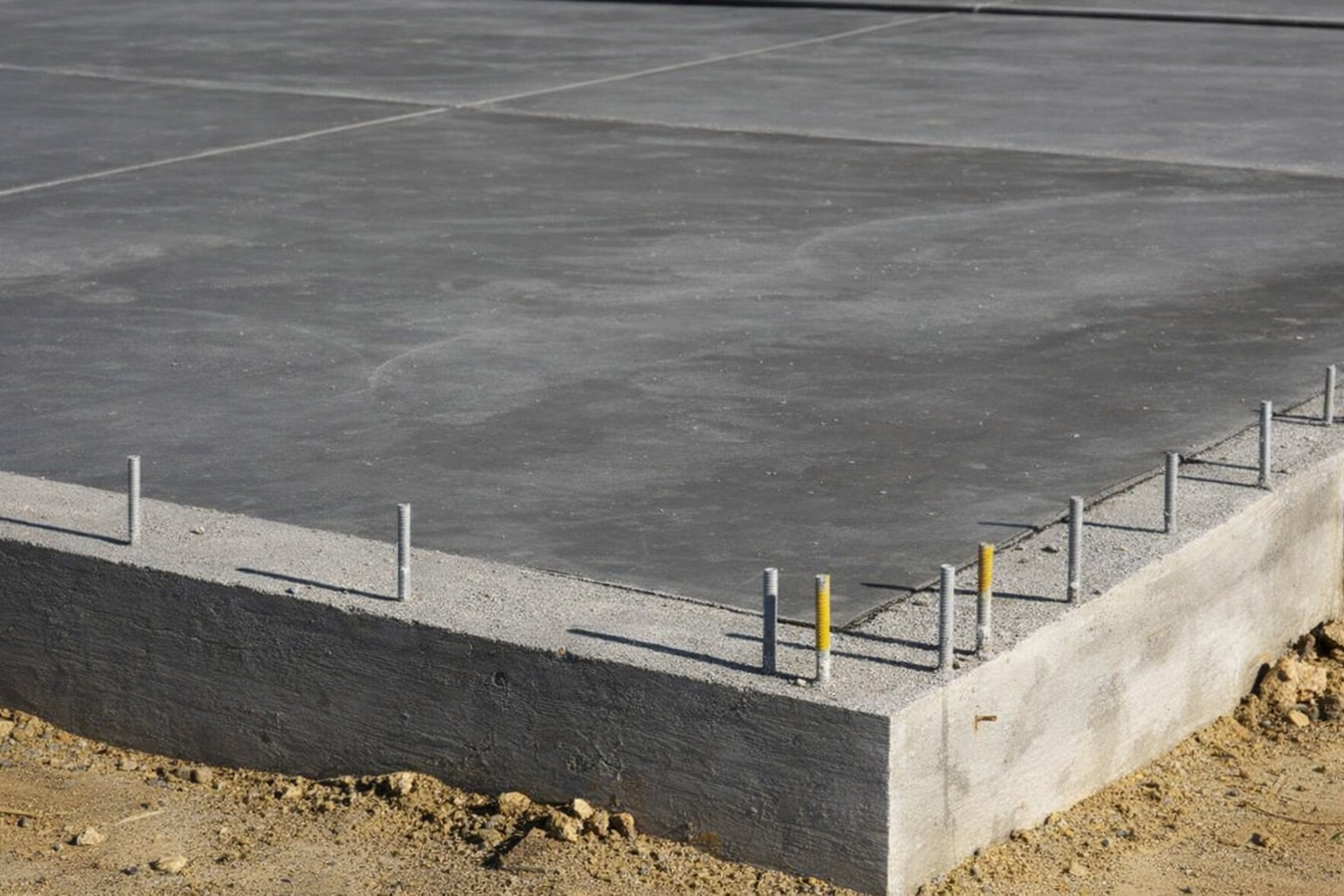
Slab foundation building in Conway means pouring a single reinforced concrete pad that becomes both the floor and the structural base of your home or addition - most residential slabs take three to five days of active site work plus a week of curing before framing can begin, and a properly built slab can last the lifetime of the structure above it.
Slab foundations are the most common foundation type built across central Arkansas, and for good reason. Conway's relatively mild winters and flat terrain make a slab-on-grade a practical, cost-effective starting point for any new construction. The challenge here is the soil. Faulkner County's clay-heavy ground expands during wet springs and contracts during the dry summer months, and that movement is what separates a well-built local slab from a cheap one. Homeowners adding an attached structure often pair slab work with our concrete footings service to address load-bearing perimeter support at the same time.
Conway is one of the fastest-growing cities in Arkansas, and that growth means new slabs for additions, garages, outbuildings, and new home starts across every neighborhood - from the newer subdivisions off Dave Ward Drive to in-fill lots near downtown. The city's permitting process is part of every job we do here, and we handle it so you do not have to.
The clearest sign is simply that you have a building project that needs a foundation. If you are building a new home, a garage, a room addition, or a large outbuilding in Conway, a poured concrete slab is almost certainly part of the plan. Without one, no structure can be safely or legally built on the property.
Small hairline cracks are common and usually harmless. But cracks wider than a quarter inch, cracks where one side sits higher than the other, or cracks that seem to be growing longer over time all point to slab movement. In Conway, this is often tied to the clay soil shifting below, and it may mean a section needs replacement rather than patching.
When a slab shifts, the walls and door frames above it shift too. If doors that used to swing freely are now sticking, or gaps have appeared at the tops or bottoms of door frames, the foundation may be moving underneath. This is a common early warning in Conway homes built on clay-heavy ground, and it is worth having a contractor look before the problem deepens.
Conway receives around 50 inches of rain per year. If water consistently collects against the base of your home after a storm, it is working into the soil beneath the slab. Over time, that saturated soil can shift or erode and cause the slab to crack or sink unevenly. If your yard feels soft near the exterior walls after a typical rain, that drainage issue needs attention right away.
We pour reinforced concrete slab foundations for new homes, garages, room additions, and outbuildings across Conway and Faulkner County. Every project begins with grading the site, compacting the subgrade, and laying a gravel drainage layer before any steel goes in. For projects where the slab connects to an existing structure or meets a load-bearing wall, we coordinate our slab work with concrete footings to ensure the perimeter support matches what is above it. We handle the permit application with the City of Conway's Building and Development Services department and schedule the required footing inspection - so the city is checking our work before it gets covered up, not after.
For new home construction, we work from approved plans and pour monolithic slabs with thickened edges that carry wall and roof loads down to stable ground. For detached garages and additions, we adapt the design to match the existing grade and drainage pattern of the property. Homeowners who need broader foundation scope - such as a full new foundation for an older home - often pair this work with our foundation installation service, which covers more complex foundation types and replacement projects. Every slab we pour is designed to handle Conway's clay soil movement, not ignore it.
Best for new residential construction where a monolithic slab-on-grade is specified by the builder or required by the lot conditions.
A good fit for detached garages, workshops, storage buildings, or carports that need a flat, durable floor and proper drainage away from the structure.
Suited for homeowners adding square footage to an existing home, where the new slab must connect cleanly to the current foundation and meet city permit requirements.
For properties where a portion of an existing slab has cracked, heaved, or settled beyond repair, and a targeted section replacement is more practical than a full re-pour.
The biggest challenge in slab foundation building in Conway is not the pour itself - it is what happens below the slab. The Arkansas River Valley's clay soils expand when wet and shrink when dry, and in a climate that swings from 50-inch annual rainfall to summer droughts, that movement is constant. A slab built without proper subgrade compaction and gravel drainage will show stress cracks within a few years. Parts of Conway near Cadron Creek and other low-lying areas also fall within FEMA flood zones, which can affect how high the finished floor must sit above grade - your contractor and the city building department need to account for this when designing the foundation. You can check your property's flood zone status at the FEMA Flood Map Service Center before planning begins.
Conway's rapid growth has also pushed new construction into areas that have varied soil profiles - from the more stable ground near older established neighborhoods to fill areas in newer subdivisions that may need extra compaction attention. We work across all of Conway and regularly serve homeowners in Maumelle and Cabot, where similar soil conditions and growth patterns create the same foundation challenges. Understanding the ground your slab sits on is the job before the job, and it is where local experience matters most.
We reply within one business day. We will visit your site to assess soil conditions, drainage, and grade before giving you a written itemized quote - no vague per-square-foot ranges before we have actually seen the ground.
We submit the building permit to the City of Conway's Building and Development Services department on your behalf. Approval typically takes a few business days to a couple of weeks depending on the city's workload - we track it and keep you updated.
Once the permit is in hand, the crew grades, compacts, forms, and places reinforcement - usually one to two days of prep. The pour itself happens in a single day. In summer, we schedule it for early morning and protect the fresh slab from the afternoon heat.
The slab cures for at least a week before framing begins. During that window, the city inspector visits and verifies the work meets code. Once the slab passes, we walk the site with you, explain what you are looking at, and hand over warranty terms in writing.
No pressure and no vague numbers - just a clear, itemized quote after we see your site in person. We handle the permit and the city inspection.
(501) 273-0974We pour slabs specifically for the expansive clay soils that run through the Arkansas River Valley - not a generic design copied from a drier region. That means more aggressive compaction, a gravel drainage layer, and thickened edges where the load concentrates. It is the difference between a slab that stays flat and one that shows stress cracks after the first dry summer.
We apply for the Conway building permit, track approval, and schedule the required footing inspection - so the city checks the work before the concrete goes in, not after. Unpermitted foundation work can create serious problems at resale and with insurance claims. We do not give you that problem to inherit.
We work across 12 cities in the region, which means we see how soil, drainage, and site conditions vary from neighborhood to neighborhood in Faulkner and surrounding counties. That breadth of local work informs how we approach every individual slab, and it is the kind of pattern recognition you only get from volume.
Conway's summers push well past 90 degrees, and extreme heat weakens concrete if the crew does not actively manage the curing process. We schedule pours for early morning during summer months, use mixes designed for high-heat conditions, and keep the slab moist during the critical first days of curing. The American Concrete Institute sets the standards our crew is trained against for hot-weather work.
A slab foundation is not the kind of thing you want to second-guess after the fact. Every decision we make from site assessment through the final walkthrough is aimed at giving you a foundation that holds up through decades of Conway weather - not just through the inspection. Call us or submit the form above and we will schedule a site visit.
Full foundation installation for Conway homes, including crawl space and complex replacement projects on older housing stock.
Learn more about Foundation InstallationLoad-bearing perimeter footings poured to code for garages, additions, and structures that need independent below-grade support.
Learn more about Concrete FootingsConway contractors book fast in spring and fall - locking in your start date now keeps your project on track and avoids a weeks-long wait when the weather turns ideal.