
Loading...
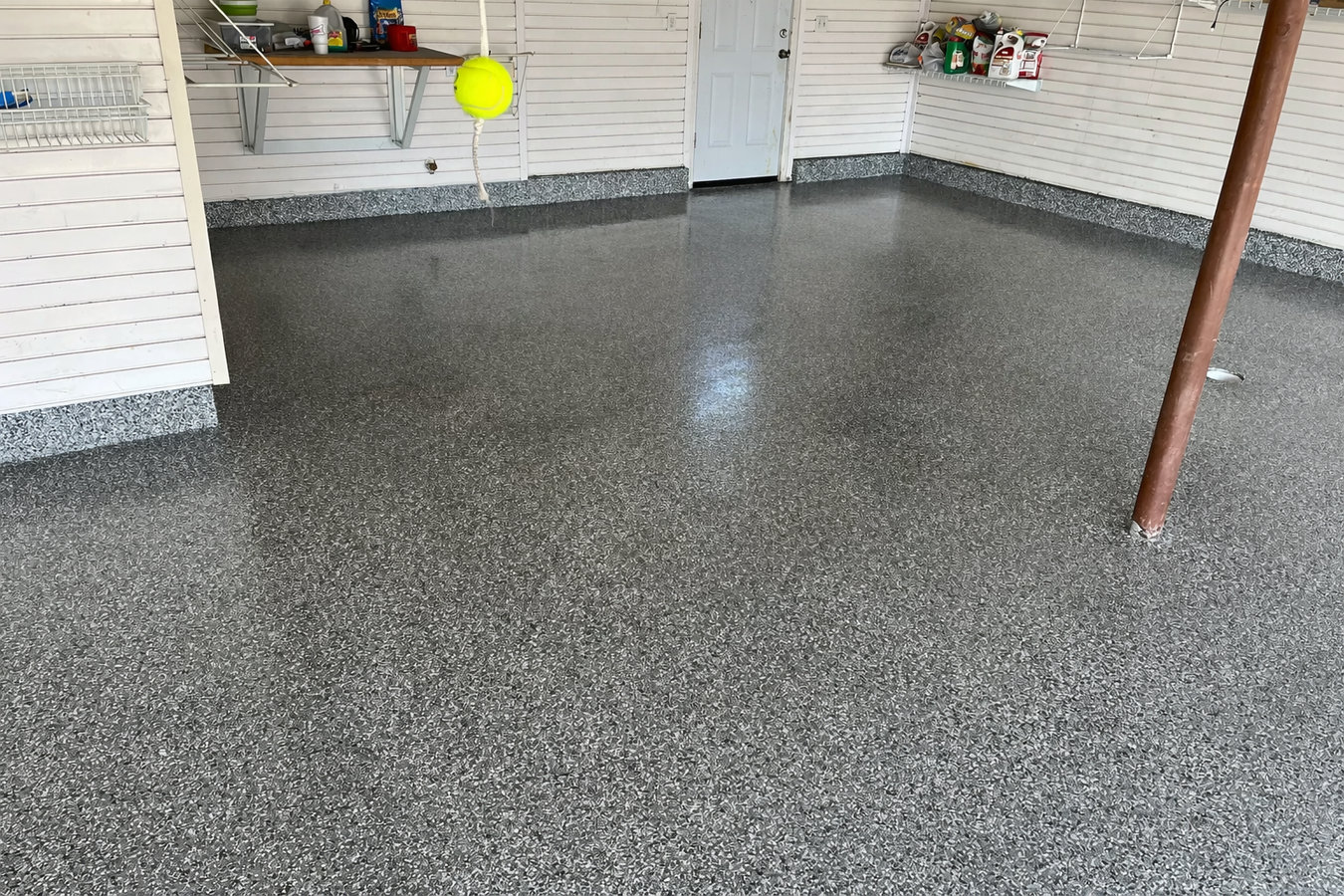
Cracked, uneven, or crumbling garage floor? We handle every step in Conway - demolition, base prep for clay soil, permits, and a finished pour that lasts for decades.
Garage floor concrete in Conway means removing the old slab, grading and compacting the clay soil underneath, laying a gravel base, and pouring a fresh slab — most residential two-car garages take one to two active days on-site, with 28 days to full strength. Done correctly, a new garage floor handles daily vehicle traffic and central Arkansas weather for 30 years or more. If you are thinking about finishing your garage as a workspace or adding a decorative surface, our decorative concrete service covers those options once the base slab is in place.
The difference between a floor that lasts and one that starts cracking within a few years comes down to what happens before the concrete truck arrives. Conway sits on clay-heavy soil that expands and contracts with every wet spring and dry summer. That movement stresses any slab built on top of it. Proper subgrade compaction and a solid gravel base layer are not optional extras here - they are the reason the floor holds up.
Small hairline cracks are normal, but if one side of a crack sits higher than the other or the crack has grown wider over the past year, the slab is moving. In Conway, that usually means the clay soil underneath is shifting with seasonal rain and dry spells. Patching the surface does not fix what is happening below it.
Standing water collecting in the middle or back of your garage after a heavy rain means the floor has settled unevenly or was never graded correctly. Conway gets around 50 inches of rain per year, so a floor that does not drain toward the door is aging faster than it should and causing ongoing moisture problems.
When the top layer starts peeling away in chips or flakes, the surface has deteriorated past the point where patching makes sense. This breakdown typically happens when the original pour was done in poor weather or the concrete was not properly cured - both problems that show up years later.
Many of Conway's established neighborhoods were built in the 1980s and 1990s, which means a lot of garage floors are approaching or past the 30-year mark. At that age, even a floor that looks passable on the surface can have thin spots, settled sections, or deteriorated edges that make replacement more practical than repeated repairs.
We pour residential garage floors at the standard four-inch thickness for everyday passenger vehicles, and at five or six inches when you need to support heavier loads - trucks, boat trailers, or workshop equipment. Every project includes demolition and haul-away of the existing slab, proper subgrade preparation, gravel base placement, and a finished pour with control joints cut before the concrete sets. For homeowners who want a more polished result, we also offer decorative concrete finishes including epoxy-ready surfaces and stamped patterns. When the project involves more than just the garage, we handle concrete floor installation for workshops, additions, and basements as well.
We pull the required City of Conway building permit before work begins and handle the inspection process from start to finish. After the pour, we walk you through the curing timeline - when you can walk on it, when you can drive on it, and what to watch for during the first month. Coatings like epoxy need to wait at least 28 days after the pour before they will bond correctly, so if a coating is part of your plan, we factor that timing in from the start.
Suited for two-car garages with everyday passenger vehicle traffic and normal storage loads.
Built thicker for workshops, trucks, boat trailers, and garages used as working spaces.
Ideal for homeowners converting a garage to living space or wanting a finished, easy-to-clean surface.
Conway's clay-heavy soil is one of the most common reasons garage floors fail early in this area. The ground here swells when it rains and shrinks when it dries out - a cycle that repeats every season and puts constant stress on anything sitting on top of it. A contractor who skips proper base preparation to save time is handing you a floor that will start cracking within a few years. Homeowners in Cabot face the same clay soil conditions, and the same base-first approach we use in Conway applies there as well.
The weather adds another layer of complexity. Conway summers regularly push into the 90s with high humidity, and pouring concrete in those conditions without precautions - early morning start times, surface moisture during curing - can produce a weaker floor even from a good mix. Winter brings freeze-thaw cycles that work moisture into small surface cracks over time. Conway's growth has also brought a wide range of contractor quality to the market, which makes it worth asking any bidder to pull a recent permit history in Faulkner County. Homeowners in Searcy run into the same range of quality, and verifying Arkansas licensing before signing is the same smart move in either city.
We respond within 1 business day. You talk to someone who can answer real questions about your project - garage size, whether there is an existing slab, and what you plan to use the space for. No call centers, no forms that disappear.
We visit your property to check the existing floor, assess the soil, and confirm truck access. You receive a written estimate that separates demolition, base prep, and the pour - so you know exactly what you are paying for.
After you accept the estimate, we pull the City of Conway building permit before scheduling the crew. Demolition and base preparation happen first - usually a full day - and the pour follows once the base is right.
The pour and finishing for a standard two-car garage takes three to five hours. After that, we walk you through the curing timeline: foot traffic after 48 hours, vehicles after 7 days, full strength at 28 days.
Free written estimate. We pull the permit. No surprises on the invoice.
(501) 273-0974We compact and grade every subgrade before a single yard of concrete is ordered. Conway's expansive clay soils are the main reason garage floors fail early in this area - and skipping or rushing that step is the most common mistake. Our process matches what the American Concrete Institute recommends for residential flatwork on problem soils.
We pull the required City of Conway building permit before any crew shows up on your property. That permit triggers a city inspection, which creates an official record that the work met local code. A contractor who suggests skipping the permit is asking you to take a risk on your home's value and your insurance coverage.
We work across Conway and the surrounding region - from Faulkner County neighborhoods near the UCA campus to newer subdivisions off Dave Ward Drive. That range of local experience means we know what the soil and weather do to concrete in this part of Arkansas, not just in theory.
We monitor the forecast before every job and reschedule pours if conditions are not right. Conway summers are hot and humid enough to damage freshly poured concrete if the crew does not take precautions. Rescheduling when the forecast calls for extreme heat is how we protect your floor - and your investment.
Every one of these points comes back to the same thing: a floor that holds up in Conway's specific conditions, not just one that looks finished on the day we leave. We do the prep work that prevents problems - so you are not calling someone back to patch or replace it a few years from now.
Transform your garage floor or outdoor surfaces with stamped, stained, or polished finishes built for Conway's climate.
Learn more about Decorative concreteInterior floor slabs for workshops, basements, and additions poured to the same standard as a new garage floor.
Learn more about Concrete floor installationWe are booking projects now - contact us to lock in your date before the summer heat makes scheduling tighter.